
AI stocks fell. Why wasn’t good news enough?
Nvidia delivered stronger cash flow and Anthropic went public, yet AI stocks fell. This week’s letter examines what the selloff reveals about earnings, funding and investor confidence.
AI stocks fell. Why wasn’t good news enough?
Last Sunday’s letter left us with two questions. Could Nvidia turn its growing sales into cash? And could the companies behind the AI buildout keep finding money?
This week brought encouraging evidence on both. Nvidia’s operating cash flow doubled from the previous quarter. Anthropic reached the public market with a record-breaking offering.
By Friday, Nvidia had lost almost 23% for the week. Anthropic had fallen roughly 20% from its opening trade. Gold, bitcoin and the broader stock market were falling too.
The businesses had delivered some of the news investors wanted. Their share prices told a much less reassuring story.
There were few places to hide. Investors were selling across technology, smaller companies, gold and bitcoin. It looked less like a move from one sector to another and more like a broader effort to cut exposure and raise cash. Treasuries were a notable exception.
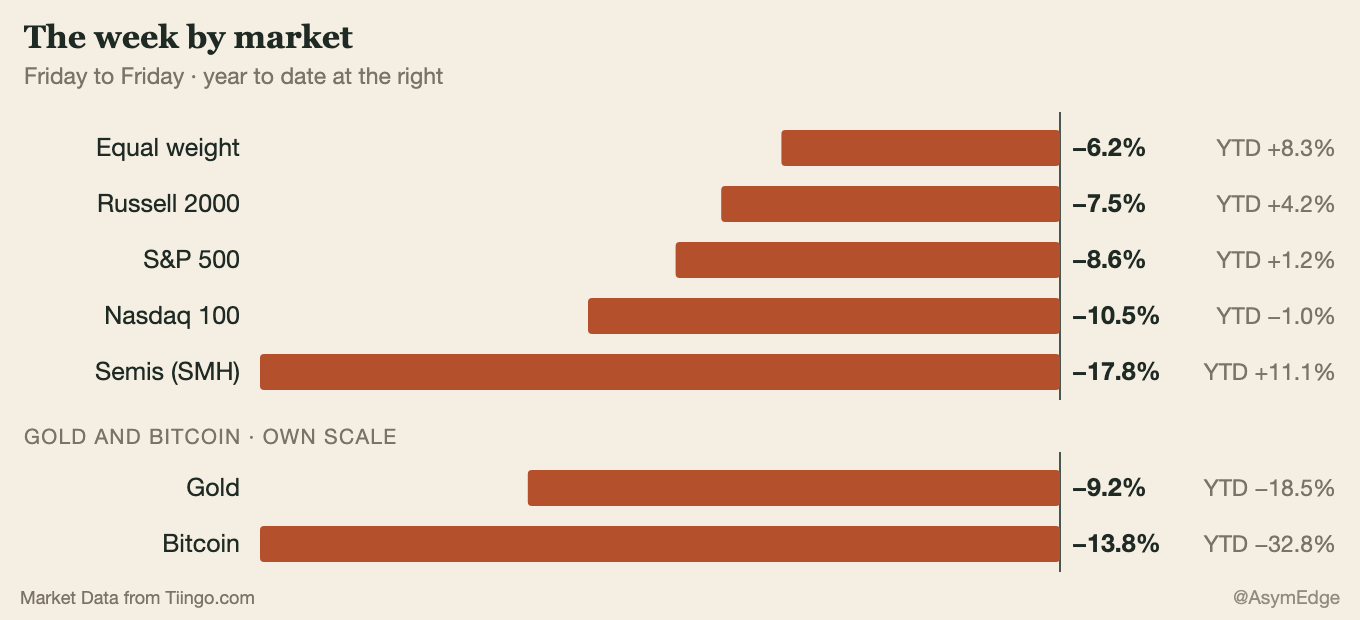
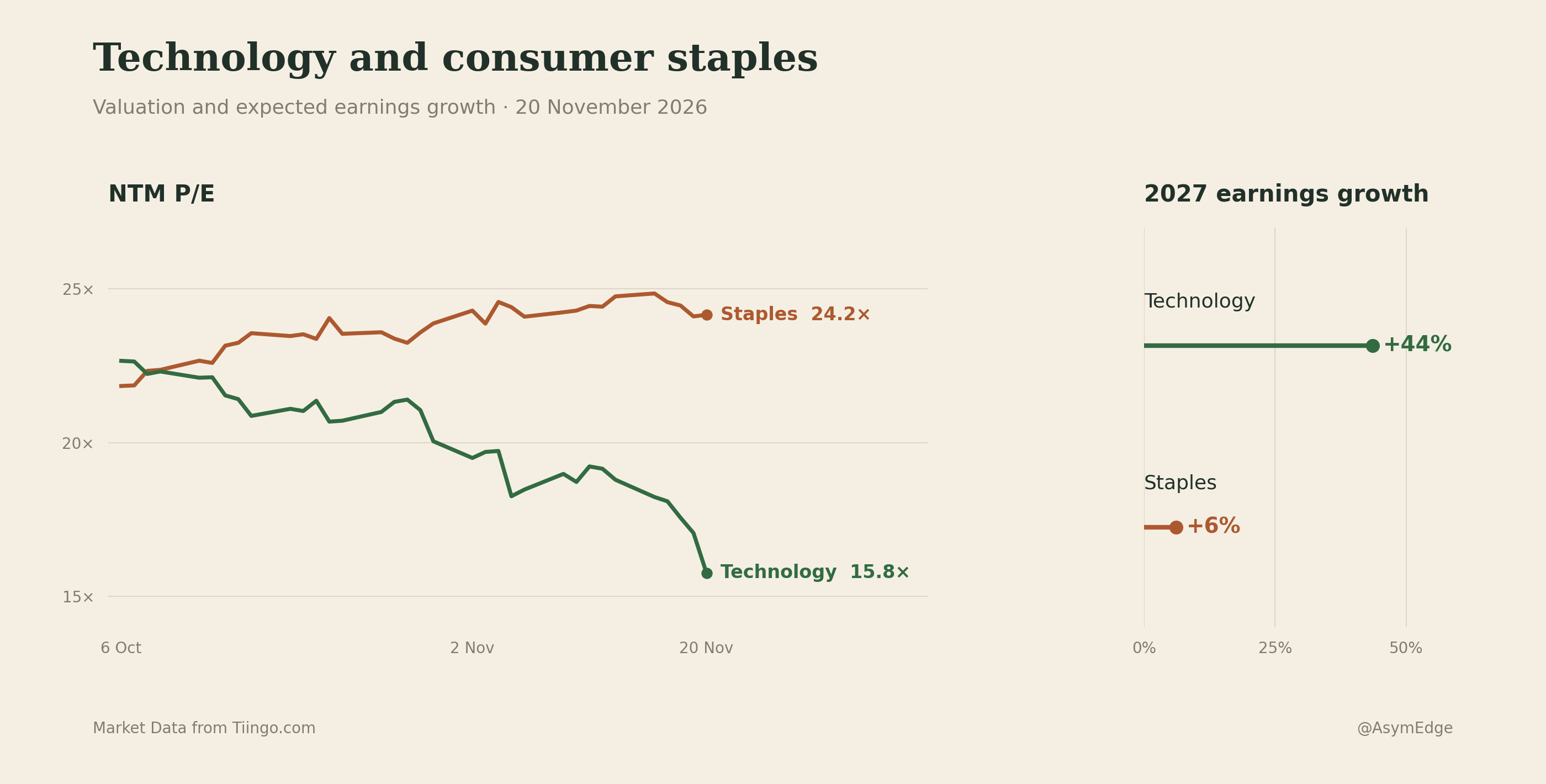
Defensive holdings offered some shelter. Consumer staples fell 2.1%, versus 12.5% for technology, while intermediate Treasuries gained 1.2%. That resilience comes at a price: our sector baskets put staples at 24.2 times forward earnings, versus 15.8 for tech. Investors are paying more for the steadier businesses, even as tech carries much higher growth forecasts.
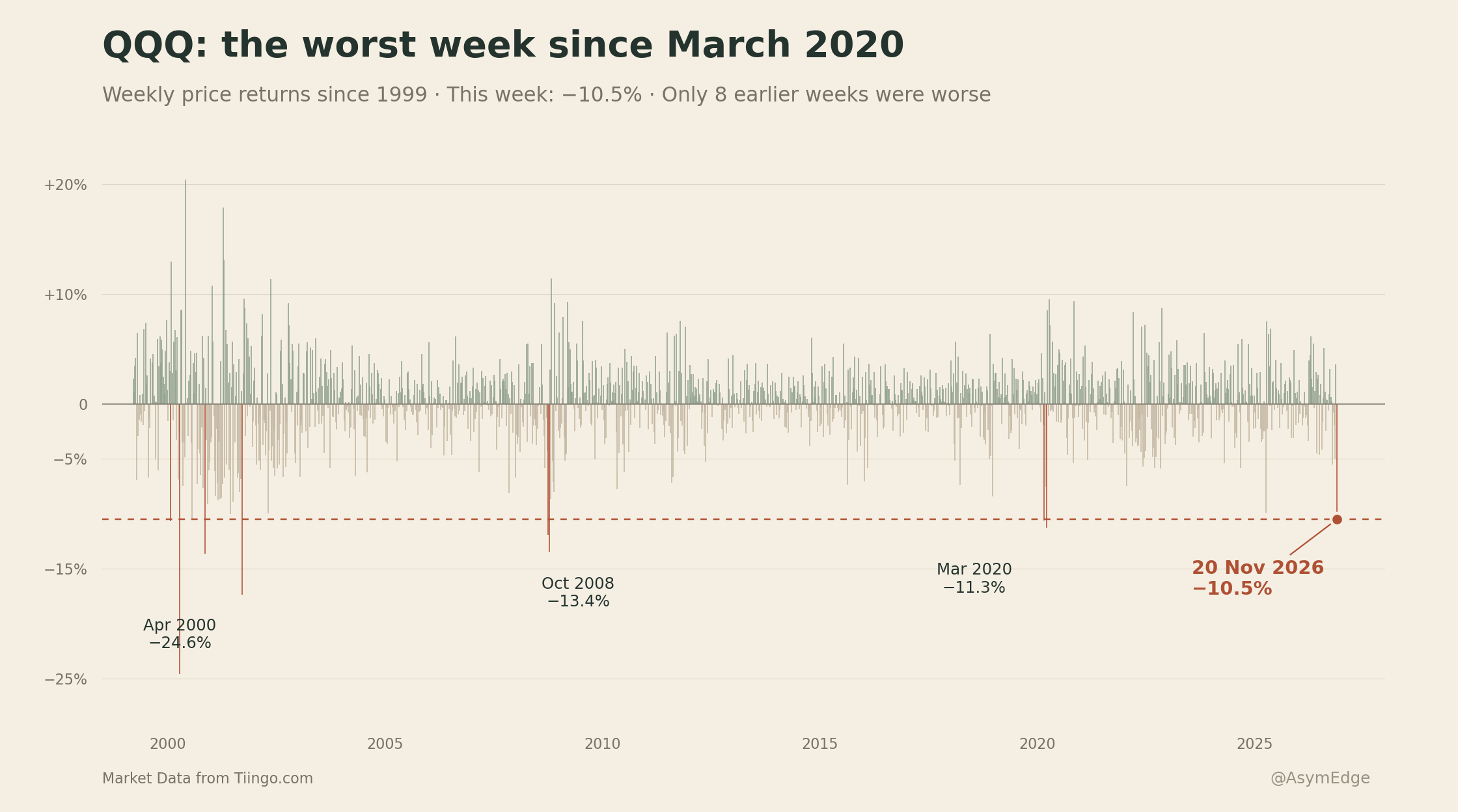
QQQ’s 10.5% weekly fall was its worst since March 2020, with only eight worse weeks since its 1999 launch. Nvidia’s 22.9% decline was its worst since October 2008.
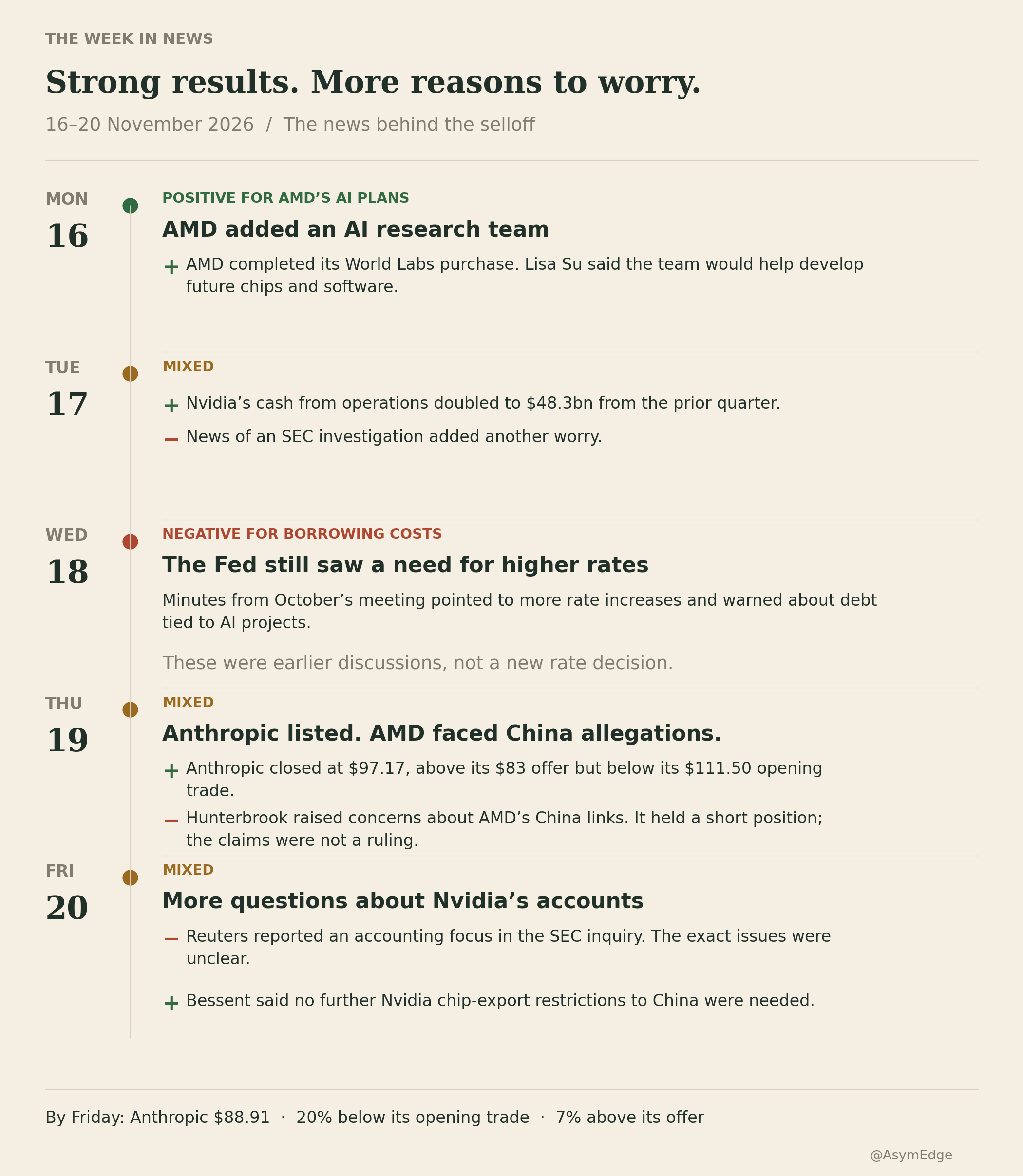
Inside that broad decline, Nvidia’s results improved the evidence we had questioned last week. Tuesday’s report showed $115.8 billion in revenue and $48.3 billion in operating cash flow, twice the previous quarter’s figure.
Nvidia’s earnings estimates rose 5.1% between 23 October and 20 November, measured over the same earnings window. Its share price fell 40.5% over those same dates.
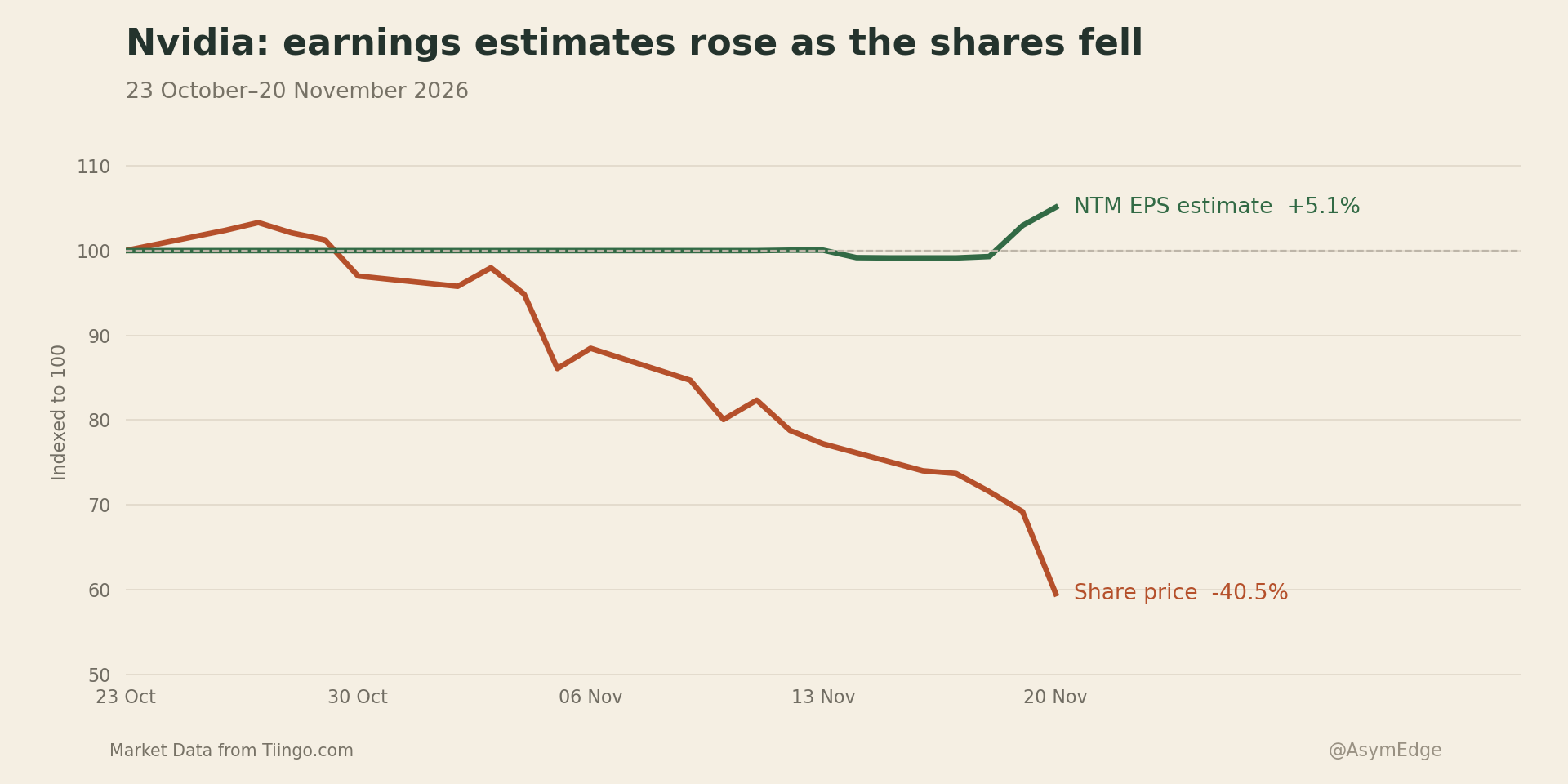
The earnings forecast moved up. The price moved down. Investors were paying much less for an improving forecast, but the week also brought new reasons to question how dependable those future profits would be.
The cost of funding the next stage
The Fed minutes weakened hopes that cheaper money would support the next stage of AI investment. They also highlighted financing arrangements that are hard to see through and the risk that borrowing could amplify market stress.
Large, profitable companies can fund more of the AI buildout from their own cash. Operators that depend on lenders or new investors are more exposed to expensive or scarce funding. Even a project with customers waiting can be delayed if the money is not ready.
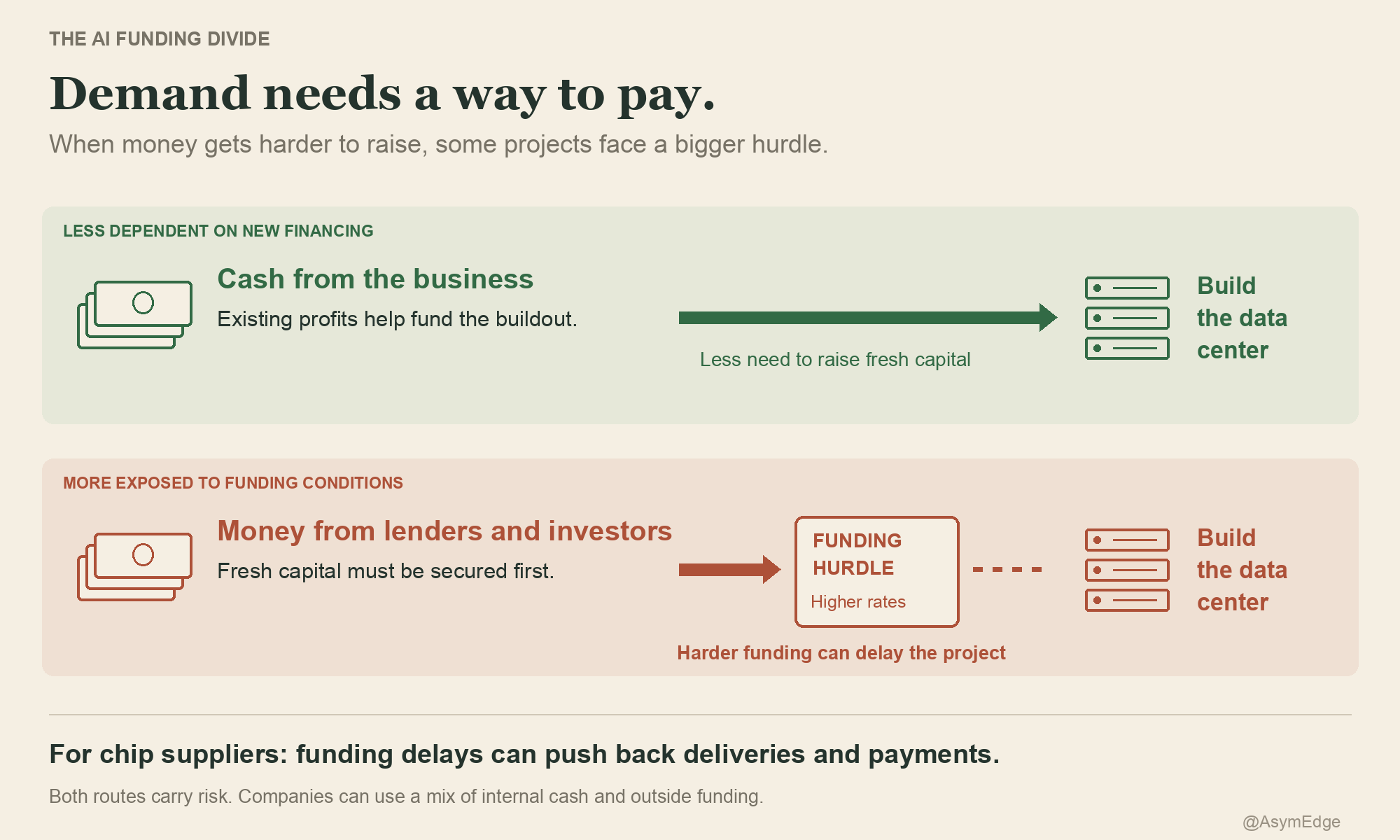
On Tuesday’s earnings call, Colette Kress, Nvidia’s interim CEO, said certain Nvidia guarantees only start once the customer has secured funding and the data center is ready. She described this as a clarification of existing terms. For Nvidia and AMD, customer demand is only one step toward a completed sale.
Anthropic raises the money
Anthropic offered a striking test of that funding concern. Its initial offering was roughly $81 billion, including shares sold by existing holders. It demonstrated that investors would still commit substantial capital to AI.
Then came the reversal. The shares were offered at $83, opened on Thursday at $111.50 and closed Friday at $88.91. A buyer at the opening trade was down about 20%. An investor allocated shares at the offer price was still up about 7%. Both numbers describe the same IPO.
That is why the distinction matters: the fundraising succeeded while the opening valuation failed to hold. The subsequent share-price fall does not withdraw the proceeds the company received.
Last week, we followed the connection between Anthropic, cloud operator Nscale and Nvidia. Anthropic had committed to buying computing services, while Nscale still needed firm financing for the infrastructure behind those contracts.
We were also watching for Nvidia’s investment in Nscale, expected around 16 November. We could not confirm its completion by Friday. Nscale did announce that its first Vera Rubin systems were online, a sign that deployment is moving forward. But funding the Anthropic project remains a separate question. Anthropic now has more money; we still need evidence that the infrastructure behind its commitments is funded.
Becoming a public company also gives investors more evidence to work with. Regular financial reports should make Anthropic’s revenue, losses, cash use and spending commitments easier to follow. They will not reveal every contract, but they should help us judge whether growth in AI demand is narrowing the gap between what the business earns and what it spends.
A new question for Nvidia
Friday brought a new concern. Reuters reported that the SEC’s Nvidia inquiry was examining potential accounting issues, though the specific issues remained unclear. An investigation is not a finding of wrongdoing.
The shares were already falling before that report, so it cannot explain the whole week’s decline. It does, however, add uncertainty that strong results alone cannot resolve.
There were brighter signs elsewhere. Walmart raised its outlook, core retail sales rose 0.6% from September, and Bessent’s comments offered some relief on China export policy.
At Friday’s $125.53 close, Nvidia trades at about 8.6 times forecast earnings for the next twelve months (NTM). The lower price offers more upside if those earnings arrive, but their timing and reliability remain central to the case.
Micron and Sandisk face a further risk: supply. Even if demand for computing keeps growing, additional memory production could push prices and margins lower.