
When funds have to sell
Funds cutting exposure can push good businesses down alongside disappointing ones. This week I separate the selling pressure from the earnings story, explain my Alphabet purchase, and update Sandisk and NVIDIA.
|
Weekly · the market and its twelve most-traded stocks
When funds have to sell
When a fund needs to raise cash, it cannot wait for its favourite company's next earnings report. It sells what it can. If other funds own the same shares and face the same pressure, good businesses can fall alongside disappointing ones.
That is part of the story I am watching in technology. But Alphabet's results this week complicate the idea that this is simply an opportunity created by forced selling. Search growth slowed just as the company faced a heavy investment bill. Some investors may need to sell; others have a reason to rethink what they own. Telling those situations apart is where the work begins.
A divided market, Alphabet as this week's setup, and a brief update on my other positions.
1The market
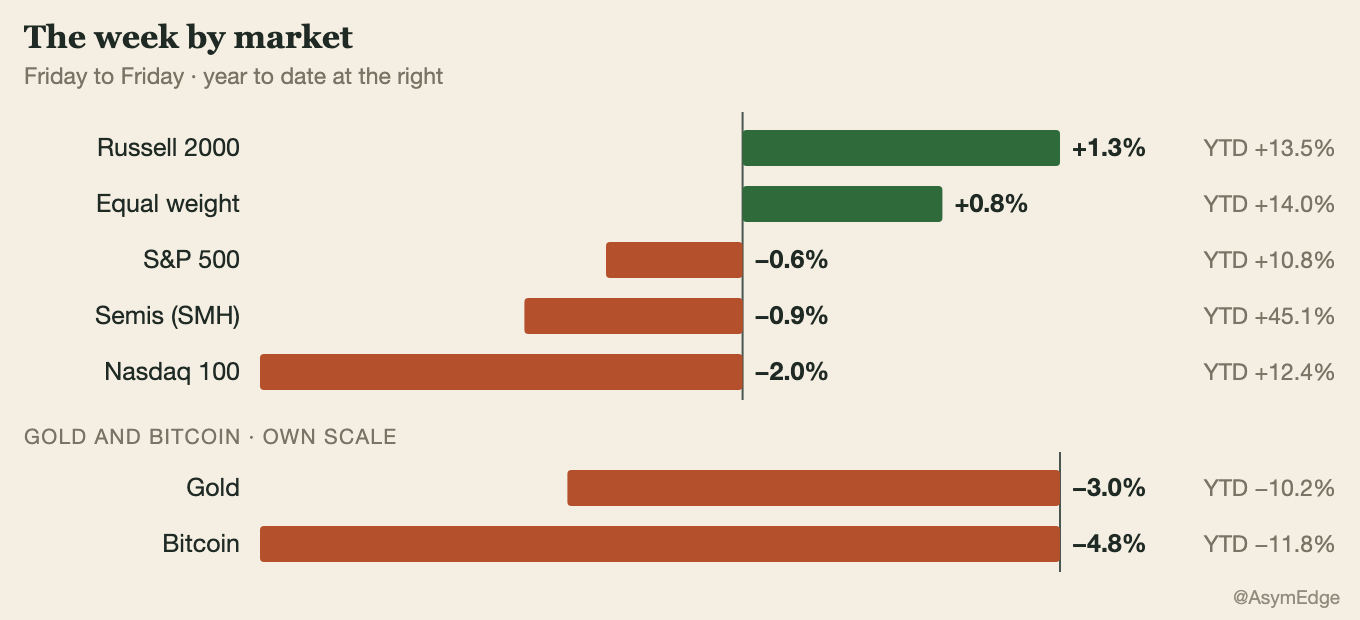
Look beyond the biggest technology names and this was a different week. The Nasdaq 100 lost 2.0%, yet the equal-weight S&P 500 gained 0.8% and small caps rose 1.3%. The familiar leaders were under pressure while other parts of the market held up. The S&P 500's modest 0.6% decline concealed that divide.
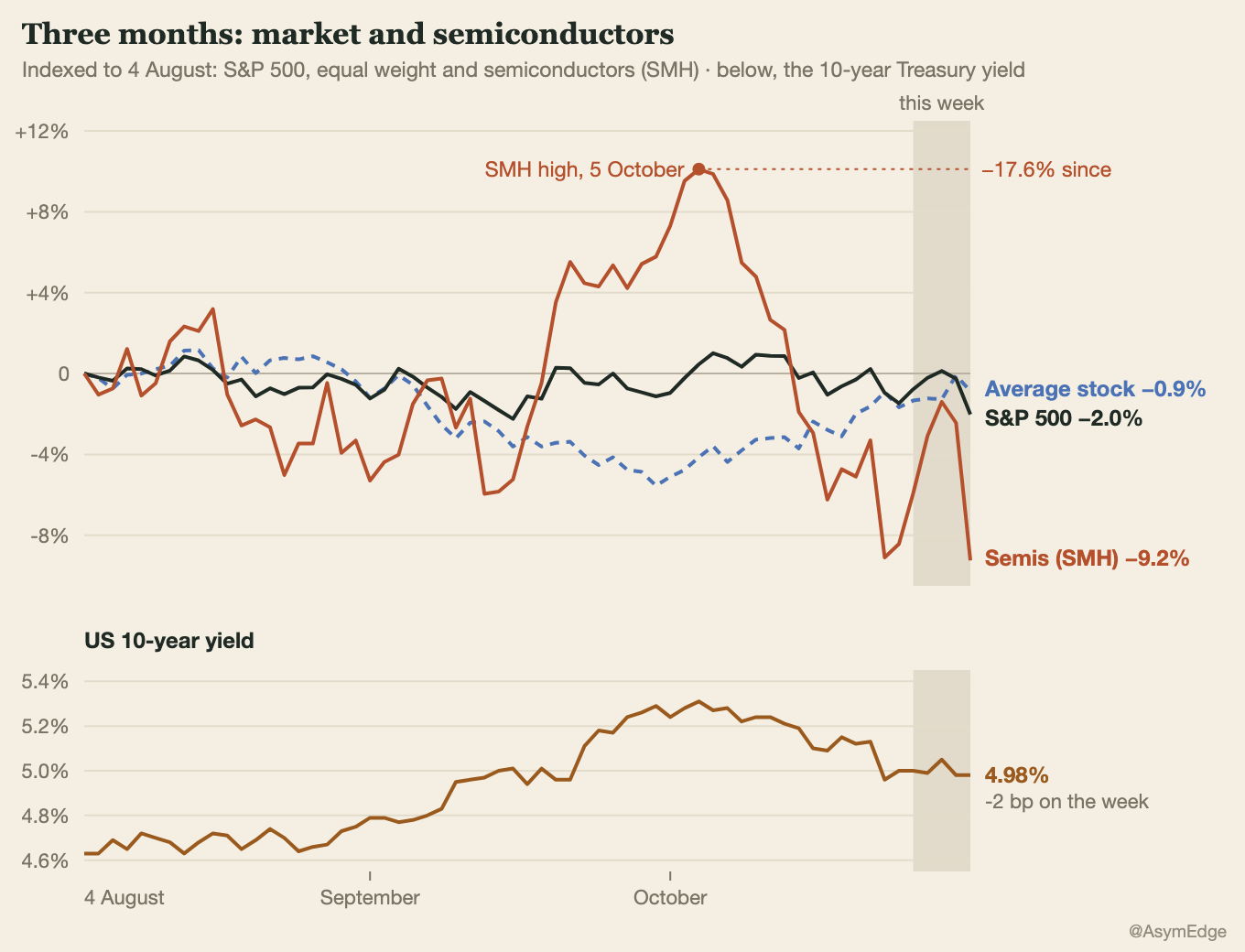
There is evidence that crowded portfolios have made October harder. Reuters reported on 23 October that losses in AI trades were prompting hedge funds to cut exposure. Once that process starts, a manager's view of a company can matter less than the need to reduce the size of a position. We cannot measure how much of this week's selling came from that process, but it helps explain why a stock can fall without an equally large change in its earnings outlook.
Market state
Market Data from Tiingo.com
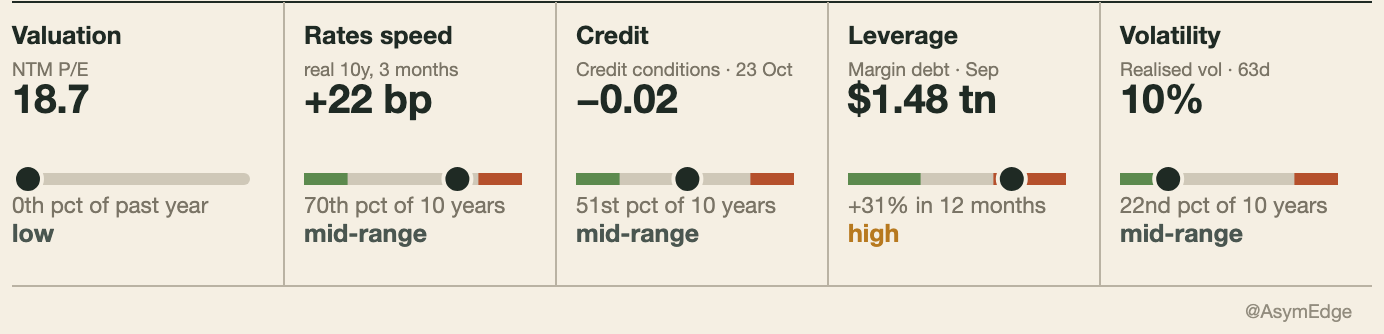
The decline has brought the S&P 500 to 18.7 times expected earnings over the next 12 months, near the bottom of its past-year range. The price of owning those profits has come down. Whether that becomes an opportunity depends on how much of the profit survives.
Borrowing makes that question more urgent. Margin debt reached $1.48 trillion in September, up 31% in a year. Losses are harder to sit through when borrowed money is involved. That figure cannot identify this week's sellers, and the slower credit and volatility readings cannot tell us when they will stop. I would look for evidence in the next company reports before treating the lower valuation as reassurance.